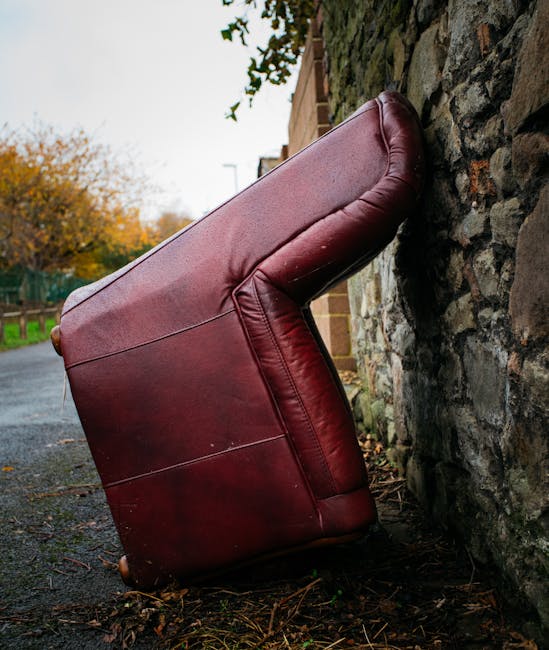
Bulky rubbish removal for Broadwater Farm residents Seven Sisters

If you live on Broadwater Farm and you're staring at an old sofa, a broken wardrobe, or a pile of mixed household waste that feels one step away from taking over the flat, you're not alone. Bulky rubbish removal for Broadwater Farm residents Seven Sisters is one of those practical jobs that sounds simple until you actually try to do it yourself. Where do you put it? How do you move it safely? What if it won't fit in the lift, or you can't leave it outside for long?
Truth be told, bulky items are awkward. They clatter, scrape, and somehow always weigh more than they look. This guide explains how removal works, what to expect, what to avoid, and how to make the whole thing less stressful. It also covers sensible choices for flats, estates, stairwells, shared entrances, and busy local streets where space is tight and time matters.
For a wider view of related services, you may also find general waste removal support and our recycling and sustainability approach useful when deciding how to clear items responsibly.
Why Bulky rubbish removal for Broadwater Farm residents Seven Sisters Matters
Bulky waste is different from ordinary bagged rubbish. A few bin bags can usually be managed with little fuss, but larger items need more care, more space, and better planning. On an estate like Broadwater Farm, that matters even more because access can be tricky, communal areas need to stay clear, and neighbours understandably don't want a hallway blocked by an old mattress for half a day.
There's also the simple safety side of it. Moving heavy furniture down stairs, around corners, or through a narrow landing is where people hurt their backs, damage walls, or chip floors. It's easy to underestimate just how awkward a chest of drawers or a fridge freezer can be until you are halfway down the stairwell and thinking, "Well, this wasn't my best idea."
From a local perspective, a tidy and well-managed clearance keeps the area more usable for everyone. Residents get their space back sooner, shared areas are left safer, and unwanted items are dealt with in a more orderly way. That can be especially helpful when you're doing a flat clearance, replacing furniture, or clearing a loft or garage that has turned into a storage zone over the years.
It also helps reduce fly-tipping risk. When people do not know how to dispose of a bulky item properly, the temptation is to leave it beside a bin store or on a pavement corner. That creates problems fast. A proper removal plan avoids that mess in the first place.
Expert summary: bulky rubbish removal is not just about taking things away. It's about protecting access, reducing stress, keeping shared spaces safe, and making sure disposal is handled in a tidy, responsible way.
How Bulky rubbish removal for Broadwater Farm residents Seven Sisters Works
The process is usually straightforward, but a good result depends on a few sensible steps. Most bulky rubbish collections begin with identifying what needs to go. That might include sofas, armchairs, wardrobes, beds, tables, mattresses, white goods, exercise equipment, or mixed items from a room clearance.
After that, the practical details matter: access, parking, floor level, lift availability, item size, and whether any pieces need partial dismantling. On an estate, these details can make the difference between a quick smooth visit and a frustrating one. If a sofa has to be carried through a tight communal corridor, for example, a little planning saves a lot of shuffling.
Some people prefer to group items by room. Others like to sort everything into keep, donate, recycle, and remove. Either works. The main thing is to be clear before the clearance starts, because once the team arrives, you want the job moving, not a long back-and-forth over what stays and what goes.
If the waste includes mixed household contents rather than one or two large items, a broader service such as home clearance or flat clearance may be a better fit. If it is mainly furniture, then furniture clearance or furniture disposal may be more relevant.
What normally happens on the day
- The items are checked and grouped.
- Access routes are assessed for stairs, lifts, and parking limitations.
- The bulky waste is moved carefully from the property.
- Usable, recyclable, and disposable materials are separated where appropriate.
- The area is left tidy, with nothing awkward left behind.
That may sound obvious, but the quality is in the small details. A professional job is often the one you barely notice, because everything just gets done without drama. Which, let's face it, is exactly what most people want.
Key Benefits and Practical Advantages
There are a few clear advantages to using a proper bulky rubbish removal service rather than trying to shift everything yourself.
- Less physical strain: no dragging furniture down stairs or trying to wedge a mattress through a doorway by yourself.
- Faster clearance: what could take you an entire weekend may be sorted in a fraction of the time.
- Safer handling: heavy or sharp items are dealt with more carefully.
- Better use of limited space: especially helpful in flats and estates where access is tight.
- Cleaner finish: no lingering pile in the hallway or beside communal bins.
- More responsible disposal: items can be sorted for reuse, recycling, or proper waste processing.
There is also the emotional side, which people sometimes forget. A cluttered room can quietly drain your energy. You keep walking past it, meaning to deal with it, and it just sits there looking back at you. Once it's gone, the space feels bigger, calmer, and easier to use. That change can be surprisingly immediate.
For residents who want reassurance around the way items are handled, the company's insurance and safety information is worth reviewing, along with the broader health and safety approach.
Who This Is For and When It Makes Sense
Bulky rubbish removal is useful for a wide range of residents, but it tends to make the most sense in a few common situations.
You may need it if:
- you are replacing old furniture and need the old pieces removed first;
- you are moving out of a flat and want to leave it clear and presentable;
- you have inherited items that are too large to manage alone;
- you're tidying a storage area that has become packed over time;
- you need to clear mixed waste after redecorating or light refurbishment;
- you live in a building where lifting and carrying large items is difficult or unsafe;
- you simply don't have the time, transport, or strength to do it yourself.
It is also a good option if several items need to go at once. One wardrobe is manageable for some people. A wardrobe, bed frame, mattress, broken chest of drawers, and a couple of chairs? That becomes a proper job, and not a cheerful one.
Residents sometimes ask whether bulky rubbish removal is only for "big clear-outs". Not really. It can be just as useful for one awkward item that has been sitting there for months. There's no prize for waiting until the pile becomes a small furniture exhibit.
Step-by-Step Guidance
If you want the smoothest possible experience, it helps to approach the job in a practical order. Here is a simple method that works well in real homes.
1. Walk through the space first
Take a few minutes to look at everything that needs to go. Check whether items are damaged, too heavy, or likely to need dismantling. If something is wedged in a corner, measure it mentally against the doorway and hallway. People skip this part more often than they should.
2. Separate items into groups
Put waste into broad groups such as furniture, mattresses, electrical items, general household rubbish, and anything that might be reusable. This keeps the collection quicker and avoids confusion on the day.
3. Clear access routes
Move small items, shoes, plants, or loose clutter out of the path. Open doors if needed. If the item has to pass through a narrow corridor, a clear route can save a lot of awkward turning.
4. Think about parking and timing
In built-up areas, parking is often the fiddly bit. If the collection point is far from the property, factor that in. You want the removal to be efficient, not a slow relay race between the flat and the vehicle.
5. Ask about responsible disposal
It is sensible to ask how items will be handled after collection. Reuse and recycling should be considered where appropriate. If you want to understand that better, the recycling and sustainability page explains the general approach in plain English.
6. Confirm what is included
Before anything is lifted, make sure everyone understands what is being removed. Mixed loads can be straightforward, but only if the boundaries are clear. Otherwise, you get the classic "Oh, I thought that chair was staying" moment. Nobody enjoys that.
Expert Tips for Better Results
Here are a few practical tips that make bulky waste collection easier and less stressful.
- Measure awkward items early. Sofas, divan bases, and wardrobes often cause the most trouble at the doorway, not when sitting in the room.
- Take photos if you are unsure. A quick image can help judge the scale and access needs before collection day.
- Separate reusable pieces. If an item still has life left in it, keep it apart from broken waste so it can be assessed properly.
- Don't overload communal areas. Keep the load neat and manageable. A tidy stack is safer than a sprawling one.
- Be honest about access. If there are stairs, a lift, or a narrow corner, say so early. It helps everyone plan better.
- Book before the clutter becomes an emergency. A slow build-up is easier to manage than a last-minute deadline.
A small bit of honest planning usually saves money and hassle. Not glamorous, but true.
If your job involves a loft, garage, or storage area alongside bulky furniture, it may be worth looking at loft clearance or garage clearance as part of a wider tidy-up.
Common Mistakes to Avoid
Most problems with bulky rubbish removal are avoidable. The same few mistakes come up again and again.
- Leaving items until the last minute. This often leads to rushed decisions and poor access planning.
- Assuming everything can be left outside. In shared residential settings, that can create complaints or block access.
- Underestimating weight and size. A "small" cupboard can still be a nightmare on stairs.
- Mixing everything together. If recyclable items, general waste, and furniture are all jumbled, the process slows down.
- Not checking what should be kept. It sounds obvious, but items get thrown away by mistake when the process is rushed.
- Choosing the cheapest option without checking what's included. Cheap can become expensive if service details are unclear.
One common issue in flats is forgetting about lift access or shared corridor restrictions. It only takes one bulky item to hit a wall corner and make everyone wince. Better to plan that out first than apologise later.
Tools, Resources and Recommendations
You do not need a van full of equipment to prepare for bulky rubbish removal, but a few basic tools can help.
- Measuring tape: useful for checking whether large items will fit through doors and hallways.
- Gloves: sensible for broken edges, dusty items, or furniture with splinters.
- Strong bags or boxes: for screws, fittings, and smaller loose bits that belong with the main item.
- Basic screwdriver or spanner: helpful if something needs to be partially dismantled.
- Phone camera: handy for photos, item lists, and access checks.
For residents comparing wider clearance options, the website's related pages can be helpful. For example, house clearance may suit a full-property clear, while office clearance is more relevant for workspaces. If the main issue is a few large items, then sticking with furniture or bulky waste removal may be the most efficient route.
It can also help to review the pricing and quotes information before you book, especially if your clearance includes mixed items or awkward access.
Law, Compliance, Standards, or Best Practice
When bulky rubbish is removed from a home or flat, the main thing is that it is handled responsibly and in line with ordinary UK waste best practice. You do not need to become a waste expert, thankfully, but there are a few sensible principles worth keeping in mind.
First, waste should not be dumped illegally. That sounds obvious, yet a surprising amount of trouble starts when someone leaves items in the wrong place and assumes they will somehow disappear. They usually don't. They just become a nuisance for the next person.
Second, hazardous or specialist items need extra care. Not every bulky item is the same. Electricals, sharp broken furniture, heavy metal fixtures, or items with contamination should be treated cautiously. If there is any doubt, it is better to ask than to guess.
Third, good practice usually means prioritising reuse and recycling where possible. Not every item can be saved, of course, but some furniture, materials, and components can be handled more efficiently than simply sending everything into general disposal.
Finally, residents should expect the service to take safety seriously. That includes lifting carefully, protecting walls and floors where practical, and keeping shared spaces usable. If you ever feel unsure about how a collection will be carried out, ask direct questions. A proper provider should answer them plainly, not hide behind vague phrases.
For broader company standards and policies, it is sensible to review the about us page alongside the site's terms and conditions and complaints procedure. That gives you a clearer sense of how the service is run and what you can expect if anything needs attention.
Options, Methods, or Comparison Table
Not every bulky item should be handled the same way. Here is a simple comparison to help you decide what fits best.
| Method | Best for | Pros | Watch-outs |
|---|---|---|---|
| Self-removal | Very small loads and easy access | Can seem cheap at first | Time, heavy lifting, transport, and disposal hassle |
| Council-style set-out | Limited bulky items where permitted | Simple in theory | Timing, access rules, and waiting for collection windows |
| Professional bulky rubbish removal | Furniture, mixed large items, awkward access, tight deadlines | Fast, safer, less stress | Costs vary by load size and access conditions |
| Full property clearance | Large flat, house, loft, or garage clear-outs | Comprehensive and efficient | May be more than you need for a single item |
In practice, many Broadwater Farm residents want the middle ground: not a full property clearance, but not a DIY lift-and-pray situation either. That is where a targeted bulky collection works well. It keeps the job proportionate.
Case Study or Real-World Example
Imagine a resident on Broadwater Farm who is replacing an old three-seater sofa, a coffee table, and a broken bed frame. The items are all in a second-floor flat, there is a lift but it is small, and the hallway is shared. The resident has been putting the job off for weeks because every time they think about it, it feels like a bit of a faff.
They start by measuring the sofa and checking the access route. The bed frame is already partly dismantled, which helps. The coffee table is small enough to go in one piece. Everything is grouped near the door with a clear path kept open. On the day, the collection runs much more smoothly because the resident has already done the awkward thinking beforehand.
The real win here is not just that the items are gone. It is that the flat feels usable again. There is room to move. The entrance is clear. The replacement furniture can be delivered without chaos. Sometimes the quiet benefit is the biggest one.
That kind of clear-out can also overlap with house clearance if the resident is dealing with more than furniture alone, or with waste removal if the load includes mixed non-furniture rubbish as well.
Practical Checklist
Use this checklist before collection day so nothing important gets missed.
- List every item to be removed.
- Check whether any item needs dismantling.
- Measure the largest pieces.
- Clear corridors, doors, and entrance routes.
- Decide what should stay, what should go, and what might be reusable.
- Confirm access details such as stairs, lift size, and parking.
- Keep small loose parts together in one bag or box.
- Review the service details and any booking notes.
- Make sure pets and children are kept away from the moving path.
- Do a final walk-through before the team arrives.
If you are also clearing a room, flat, or storage space, the checklist becomes even more useful. It turns a messy job into something manageable. Not perfect, just manageable. And that's enough.
Conclusion
Bulky rubbish removal for Broadwater Farm residents Seven Sisters is really about making difficult household jobs feel simple again. It saves time, reduces strain, protects shared spaces, and helps you deal with large unwanted items without turning your week upside down.
The best results usually come from a bit of early planning, a clear list of what needs to go, and a service that understands the realities of flats, lifts, stairwells, and estate living. Keep it tidy, keep it safe, and don't leave the awkward bits until the last minute if you can help it.
If you are comparing options or preparing for a clear-out, the most sensible next step is to review the relevant service pages, check the pricing details, and make sure you understand how access and disposal will be handled. A little clarity upfront goes a long way.
Get a free quote today and see how much you can save.
Sometimes the simplest thing you can do for your home is clear the space and give yourself a bit of breathing room again.
Frequently Asked Questions
What counts as bulky rubbish?
Bulky rubbish usually means items that are too large, awkward, or heavy for normal bin collection. Common examples include sofas, beds, wardrobes, mattresses, tables, and other large household items.
Can bulky items be removed from flats on Broadwater Farm?
Yes, provided access is workable and the collection is planned properly. Flats often need a bit more preparation because of stairs, lifts, and shared spaces, but that is very normal.
Do I need to dismantle furniture before collection?
Not always. Some items can be taken as they are, while others are easier to move if partially dismantled. If a bed frame or wardrobe is especially large, taking it apart can save time and reduce risk.
Is bulky rubbish removal better than doing it myself?
For one tiny item, DIY might seem fine. For heavy or awkward pieces, professional removal is usually safer, quicker, and far less stressful. Honestly, your back will probably thank you.
What if I only have one item to remove?
That can still be worth arranging if the item is large, heavy, or difficult to move. A single sofa or mattress can be just as awkward as a larger load if access is tight.
Can mixed rubbish and furniture be collected together?
Often, yes. Mixed loads are common, especially during a flat clearance or room reset. It helps if you separate the items as much as possible before collection so the job stays organised.
How should I prepare my flat before the team arrives?
Clear the route, group items together, remove small obstacles, and make sure any access details are understood in advance. A five-minute tidy-up can make the whole visit smoother.
What happens to the items after collection?
That depends on the type and condition of the items. Reusable pieces may be set aside where possible, while others are sorted for recycling or disposal in line with standard waste practice.
Are there special concerns for communal areas?
Yes. Hallways, lifts, and shared entrances should be kept clear and used carefully. In estate settings, a tidy and well-timed collection matters because other residents are using the same spaces.
How do I know which service page is most relevant?
If you are clearing a full flat or home, look at flat clearance or home clearance. If it is mainly furniture, furniture disposal may be the better fit. For general mixed waste, waste removal is a sensible starting point.
What if I'm not sure whether an item can be removed?
It is better to ask before booking rather than guess. A quick review of the item, access, and any special handling needs usually clears things up fast. That saves a lot of backtracking later.
Where can I find more information about pricing and service expectations?
You can review the site's pricing and quotes page, plus the policies and service pages linked throughout this article. That gives you a clearer picture before you arrange anything.
And if you are still standing in the middle of a cluttered room wondering where to begin, start with the biggest item first. It changes the feel of the space quicker than you might think.