Garden Clearance in Seven Sisters

Garden clearance in Seven Sisters should make outdoor spaces easier to use again, whether that means removing overgrown cuttings, broken outdoor items, old timber, shed contents or mixed green waste. Our service is built around practical clearance work for homes and small premises, with attention to sorting, loading and responsible disposal. If your garden has become difficult to maintain, we can help restore a manageable starting point so you can plan the next stage with more confidence.
We handle a range of clearance tasks linked to gardens and outside areas, including the collection of branches, hedge trimmings, soil, unwanted planters, fencing offcuts and general exterior clutter. Where items can be separated for different handling streams, we do that as part of the job. That means less guesswork for you and a tidier result at the end of the visit. For a straightforward first step, tell us what needs removing and roughly how much there is.
For an accurate quotation, it helps to describe access, the amount of material, and whether anything is unusually bulky, heavy or mixed in with waste that needs careful sorting. You can also mention whether the work is a one-off clearance after a season of growth or a broader tidy-up before garden improvements. If you already have photos, they can make it easier to estimate the job, but they are not essential. Use the information you already have and request a quotation.
Garden waste, bulky outdoor items and mixed clearance
Garden work is rarely limited to leaves and grass. In many properties, the bigger challenge is a mix of organic waste and practical obstructions: damaged pots, stacked materials, old compost bags, cracked furniture, loose paving offcuts or sections of timber that have been stored outside for too long. A clear-up needs to account for all of that, because the most useful result is not simply less waste, but a space that is easier to walk through, inspect and use.
We can remove garden waste in sensible groupings rather than treating everything as the same material. That may include green waste, lightweight clutter, reusable outdoor items and items that belong in a separate disposal stream. For customers, this matters because a mixed pile is often what makes the job look bigger than it really is. A well-planned clearance can reduce the amount of time spent shifting items around and improve the finish of the outdoor area.
Some gardens contain items that are not strictly garden waste but still affect the space: broken washing lines, old storage units, rotting planters, nursery containers, disused decorative pieces or packaging that has built up after maintenance projects. Where removal is appropriate, we can clear those alongside the main waste, helping you make one organised booking rather than several separate jobs. That is often the best way to deal with clutter that has spread across patios, borders and side passages.
What a clearance can include
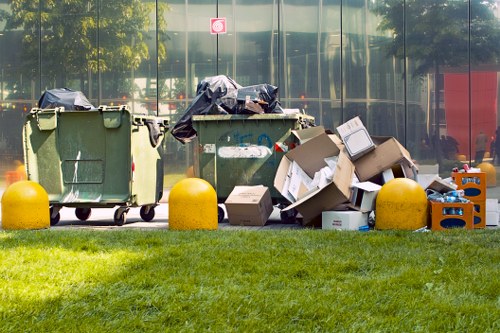
Below is a practical overview of the kinds of items that are commonly included in this type of work. The exact mix varies from one property to another, but the aim is always the same: clear the usable areas without leaving you with another sorting problem afterwards.
- branches, hedge cuttings and general green waste
- bagged leaves, weeds and garden trimmings
- old pots, plant trays and broken containers
- timber offcuts, fencing sections and dismantled panels
- weathered outdoor furniture and other bulky exterior items
- soil, compost and mixed garden debris where suitable for removal
If the space includes a shed, lean-to or side return, the clearance may also involve sorting items that have drifted out of the garden itself. That can include tools, packaging, old storage boxes and miscellaneous household pieces that were temporarily moved outside. When these items are handled together, it is easier to keep the job focused and prevent usable access routes from being blocked again during the process.
Garden clearances also tend to vary in how carefully materials need to be separated. Some customers want everything removed quickly as part of a wider tidy-up, while others prefer a more deliberate approach where garden waste, reusable items and disposable clutter are identified separately. We can work to either style, provided the items are suitable for the chosen removal method. Clear instructions at the start help the work run smoothly, especially where there are multiple material types in the same area.
Before the visit and during the job
When arranging a garden clearance, the most useful information is usually simple and practical. A brief description of what is in the space, whether the items are already grouped together, and how easy it is to reach the garden can all help shape the quotation. If there are gates, narrow paths, shared access points or steps, it is worth mentioning those details early so the job can be planned properly. That avoids surprises once work is under way.
It also helps to know whether the garden contains anything that needs to stay in place, such as established plants, ornaments, boundary features or stored equipment. Clearance work is most efficient when there is a clear understanding of what should go and what should remain. If the area has become cluttered over time, you do not need to produce a perfect inventory; a general outline is usually enough to start. A few clear notes can be more useful than a long explanation.
Our approach is to remove the agreed items efficiently, keep the working area as tidy as possible, and leave the remaining outdoor space easier to access. Where necessary, we can break a larger task into sections so that the work is handled in a sensible order. That is especially useful if the garden includes different zones such as a lawn, patio, shed area and side path, each with its own type of material and clearance requirement.
Garden clearance and related outdoor removals

Garden clearance often overlaps with other outdoor removals, especially where the space has been used for storage or contains items from earlier property work. A good example is old furniture stored outdoors after a refurbishment, or builders’ leftovers left behind after a patio or fence job. Those items may not be garden waste in the strict sense, but they still occupy valuable room and can be included where suitable.
We also handle associated items such as dismantled outdoor furniture, damaged storage pieces, and mixed materials that have built up in corners or against boundary walls. If you are unsure whether something belongs in a garden clearance or another type of removal, it is usually better to describe it plainly rather than trying to classify everything yourself. The right category can be worked out when the job is reviewed. What matters is that the space becomes workable again.
Because outdoor spaces differ so much, the same service can look quite different from one property to another. Some clearances are mainly green waste after pruning or seasonal growth; others are dominated by old garden equipment, planters and weathered storage. A careful assessment of the mix means the work can be carried out without unnecessary handling, which is especially helpful when the area is awkward, narrow or partially enclosed.
Pricing factors and quotation details
Garden clearance pricing is usually shaped by a combination of volume, access and material type. A small pile of branches in an open front or rear garden is one thing; a deeper clearance involving mixed waste, heavier pieces and limited access is another. The amount of sorting needed can also affect the work, particularly if the items are spread across several parts of the property rather than gathered in one place.
When requesting a quotation, it is sensible to mention the main materials involved and any features that could make removal more involved. Steps, narrow side passages, locked gates and items stored at the back of the garden can all influence the practical approach. If you are comparing options, aim for a clear description of the work rather than a vague request. That gives a cleaner basis for estimating and makes the next step easier.
For many customers, the most helpful quotation is the one that reflects the actual job as it stands, not the state of the garden after imagined extra work has been added. If you are planning more than one improvement, it is still fine to ask about the clearance element separately. Start with the waste that is already there, then decide what else should be included.
Seven Sisters and the surrounding area
Seven Sisters is a district in north London, closely associated with the London Borough of Haringey and the busy corridor formed by Seven Sisters Road and Tottenham High Road. The name is often linked to the road junction rather than a single compact centre, and the area sits within a dense urban landscape shaped by transport links, terraces, interwar housing and later redevelopment. It is also connected to Tottenham, Stamford Hill and South Tottenham, which gives it a strongly mixed character in both everyday life and local movement. The station at Seven Sisters is an important interchange on the London Underground and London Overground network, while nearby South Tottenham station adds another layer of connectivity across the local rail system.
The area has a varied built environment, with long stretches of Victorian and Edwardian housing, more recent apartment blocks, commercial premises and smaller streets branching away from the main roads. Stamford Hill to the south-west is known for its distinct communities and religious institutions, while the wider Tottenham area includes larger residential estates, shopping stretches and sports landmarks such as Tottenham Hotspur Stadium to the west. Seven Sisters Road itself is one of the principal routes through north London, linking the district with Finsbury Park and beyond. Green spaces nearby include Downhills Park and Chestnuts Park, both of which contribute to the local open-space network even though the district itself is heavily urban. The area’s character is shaped by movement, mixed uses and continual adaptation rather than by a single historic core, making it an important part of inner north London’s layered geography and everyday street life.
Where gardens exist behind these streets and buildings, they often sit within compact plots, terraces or shared access routes rather than large suburban layouts. That gives the district a practical, built-up feel, with outdoor space often used carefully and selectively. The local pattern of roads, railways and residential blocks means that clearing outside areas is often about restoring circulation and reducing clutter in a tight footprint rather than dealing with vast open ground. Even so, the neighbourhood retains pockets of domestic greenery, and those spaces matter as part of the wider urban fabric.
Typical situations we clear

Every garden tells a slightly different story. Some jobs begin after a long period of overgrowth, while others follow a repair project, tenancy change or seasonal tidy-up. The work may involve one obvious pile of waste or a spread of smaller pockets around the property. By looking at the task as a whole, rather than only at the most visible heap, we can make sure the clearance covers the items that are actually getting in the way.
Common situations include overfilled corners, blocked paths, piles of cuttings left after pruning, and old materials that were kept temporarily but never moved on. We can also deal with more awkward combinations, where light garden debris sits beside heavier or bulkier pieces that need different handling. That sort of mixed clearance is often more manageable when it is approached as a single planned visit rather than several smaller attempts.
Some customers want the main open areas cleared first, so that the garden becomes usable even if additional tidying is planned later. Others prefer the work to be comprehensive, with the aim of removing as much unwanted material as possible in one go. Either approach can be sensible depending on the state of the space, the amount of material and the practical access available. Choosing the right scope matters more than rushing the job.
How we organise a garden clearance
Once the scope is agreed, the work usually follows a straightforward sequence: identify what is going, remove the items safely, and leave the remaining area in a cleaner state. That sequence sounds simple, but it matters because gardens often contain a mix of lightweight waste, compacted material and bulky objects. Organising the work properly reduces unnecessary handling and helps prevent items being moved more than once.
We can also work around features that should remain untouched, such as mature planting, decorative edges or stored equipment you still want to keep. If a job requires that sort of care, it is best to say so at the outset. A clear boundary between what is for removal and what stays behind makes the clearance more efficient and helps avoid accidental disruption to the areas you still use. Precision at the beginning saves time later.
In more involved cases, the clearance may be split into sections, especially where there is a front approach, a side path and a rear garden all holding separate material. That staged approach can be useful when access is constrained or when the waste mix changes from one part of the property to another. It allows the work to stay organised without turning a practical clearance into a complicated project.
Requesting the right level of help

Some customers only need a modest amount of garden waste removed after trimming and tidying. Others need a much broader clearance because the space has accumulated items over time. Neither situation needs to be overcomplicated. The key is to describe the current condition of the garden honestly and identify anything unusual, such as heavy objects, fragile boundaries, or materials that may need separate handling. That gives a more accurate basis for the quotation and helps the job run in the right order.
If you are preparing to ask for a price, you do not have to solve every question in advance. A few simple details about the garden, the type of waste and the access available are usually enough to begin. If the space includes old outdoor furniture, timber pieces, broken pots or other non-green items, mention those too. A clear enquiry helps us work out the most suitable approach and keeps the clearance focused on what you actually want done.
When you are ready, request a quotation and include as much practical detail as you can. If you prefer, keep it brief and direct: what needs removing, roughly how much there is, and anything that may affect access or handling. That is often all that is needed to move from a cluttered garden to a clear, usable space. Garden clearance in Seven Sisters is most effective when the work is matched carefully to the property and the waste that is already there.
Choosing a sensible scope for your outdoor space
A well-scoped garden clearance should remove the clutter that is holding the space back without creating extra disturbance. That means paying attention to the difference between waste that needs to go now and items that are simply inconvenient but still useful. Where possible, it is worth deciding in advance whether you want a targeted clear-out of problem areas or a fuller removal of everything unwanted in the garden. The more clearly that is set out, the more useful the result is likely to be.
For some properties, the right answer is a clean sweep of the obvious waste: branches, cuttings, broken items and loose clutter. For others, it is a more selective removal that preserves stored materials or garden features for later use. If you are uncertain, a balanced approach can be discussed as part of the quotation process. The aim is to match the task to the state of the garden, not to force the garden into a one-size-fits-all pattern. Practical choices usually produce the best finish.
Once the unwanted material is gone, the remaining space is easier to assess for future work such as pruning, planting or surface repairs. That is often the real value of a good clearance: it creates the conditions for the garden to be used properly again. If that is your goal, a straightforward quote request is the best place to begin. Use the details you have, and let the clearance be shaped around the actual space in front of you.